Saturday, 8 August 2020

Features of cleanroom for renting

 What is a cleanroom?

A cleanroom (or clean area) is essential for industries. It is an environment in which the cleanliness of the air and other parameters are controlled, monitored, and recorded (temperature, humidity, pressure, particles, and airflow). This allows products to be manufactured in the most hygienic way possible. In this way, modifications to the product are prevented, and it is guaranteed that it reaches the final consumer with quality and safety. Fume hood is used in a clean hat.

Maintaining a place prepared for handling medicines and products of different genres is essential. And clean rooms are ideal for preserving the microbiological and physical qualities of products. In other words, the environment is designed so that the conditions of texture, coloring, consistency, among others, are not changed. Besides, precisely because it is a controlled environment, there is no contamination in the production process. Fumehood is very primarily used in clean rooms.

The origin of cleanrooms

Originated inside hospitals, the concept of clean rooms did not appear "today." It emerged centuries ago, with surgeons who were largely responsible for what we know today as a cleanroom.

When noticing that bacteria were responsible for causing infections, it was necessary to develop solutions to combat such microorganisms. Therefore, they developed a solution with phenolic acid, which was used to sterilize the instruments used, when hand washing and spraying the solution in the environment. In this way, the risk of infections and contamination was reduced with the use of antiseptic.

To arrive at the method that is currently used, it took years of study and research on improvements to the controlled environment. The low hood is very popularly used in clean rooms.

download1.jpg


Cleanroom materials

To define which materials will be needed to be used in a cleanroom project, it is necessary to carry out the analysis and have knowledge of the activities that will be carried out in the environment. In production areas, for example, it is common to use partitions, doors, white steel sheet lining, stainless steel, and glass displays.

Classification of cleanrooms

The classification of the levels of a cleanroom is obtained through analyzes in relation to the purity of the indoor air, that is, the concentration of particles per unit of volume of air and the application of its standards.

In this way, it is possible to verify which air conditioning system is the most suitable, in order to maintain a stable temperature, control the humidity level and ensure air quality, so that the environment can contain the size of the suspended particles.

Thursday, 30 July 2020

Everything you need to know about laboratory hoods

A laboratory hood is a device that allows the extraction of toxic vapors from products used during handling. Its primary function is to protect the manipulator. The vapors are extracted from the working volume and then either treated by filtration (with charcoal and / or particles), or discharged to the outside.

There are two types of devices to differentiate:

  • the hood: a funnel-shaped exhaust causing the evacuation of air by natural depression. Today, it is still equipped with a fan allowing regular evacuation and for greater efficiency, often with side walls. It is used above devices (ovens, distillation devices, etc.) or workstations requiring space (difficult handling such as welding, etc.);
  • the fume cupboard: whose name comes directly from the university of the same name, is a Fume hood provided with side walls, but also with a front wall (almost always with guillotine) and a bottom register allowing the high aspiration and low vapors.

Typology

There are two types of laboratory hoods:

  • the Fumehood on activated carbon (standard ETRAF) without connection to the outside, so permanent recycling in the work area. These work on the principle of chemical adsorption. Their limits: the specificity of the filters and their saturation;
  • the hoods and fume extraction outwardly .

The choice is made according to the average exposure value (VME) of the most toxic product used:

  • VME higher than 400  ppm: extractor hood, without register or front glass;
  • VME between 1 and 400  ppm: laboratory fume cupboard;
  • VME lower than 1 ppm: closed and waterproof glove box type system.

The VME of chemicals can be found on the INRS website.

A laboratory fume hood or Low hood cupboard (except with an AC filter) must be fitted with an extractor (fan) which extracts the vapors to discharge them outside. The European standard NF EN 14 175 and its French extension XPX 15 206 impose very specific constraints on the manufacture of fume cupboards. Since 2006, they no longer contain any indication of minimum air speed on the front of fume cupboards. The only quantified constraint included in the French standard concerns the containment measure.

Other types of hoods

Laminar flow hood

In biology, we find Lowhood. A laminar flow hood generates purified air in particles (for example, a hood equipped with an absolute HEPA type filter stops 99.99% of particles larger than 0.3 μm) and above all, without aeraulic disturbances. Here, a flow is said to be “laminar “, if at each point in the flow section, the speed does not differ from the average speed of the flow by +/- 20%. A laminar flow is therefore unidirectional and homogeneous. There are two main categories of laminar flow hoods:

  • Horizontal laminar flows:the air treated on the filter (s) is blown towards the manipulator. This technique protects the product but not the handler or the environment from contaminants;
  • Vertical laminar flows:the air is blown from the “ceiling” of the hood by a high efficiency filter (HEPA). It comes out either through the facade (same as the horizontal flow), or it is taken up by perforations on the side or rear walls, preventing it from coming out towards the manipulator and the environment.

Wednesday, 8 July 2020

Everything you need to know about laboratory hoods

A laboratory hood is a device that allows the extraction of toxic vapors from products used during handling. Its primary function is to protect the manipulator. The vapors are extracted from the working volume and then either treated by filtration (with charcoal and / or particles), or discharged to the outside.
laboratory indoor
There are two types of devices to differentiate:
  • the hood: a funnel-shaped exhaust causing the evacuation of air by natural depression. Today, it is still equipped with a fan allowing regular evacuation and for greater efficiency, often with side walls. It is used above devices (ovens, distillation devices, etc.) or workstations requiring space (difficult handling such as welding, etc.);
  • the fume cupboard: whose name comes directly from the university of the same name, is a Fume hood provided with side walls, but also with a front wall (almost always with guillotine) and a bottom register allowing the high aspiration and low vapors.
Typology
There are two types of laboratory hoods:
  • the Fumehood on activated carbon (standard ETRAF) without connection to the outside, so permanent recycling in the work area. These work on the principle of chemical adsorption. Their limits: the specificity of the filters and their saturation;
  • the hoods and fume extraction outwardly .
The choice is made according to the average exposure value (VME) of the most toxic product used:
  • VME higher than 400  ppm: extractor hood, without register or front glass;
  • VME between 1 and 400  ppm: laboratory fume cupboard;
  • VME lower than 1 ppm: closed and waterproof glove box type system.
The VME of chemicals can be found on the INRS website.
A laboratory fume hood or Low hood cupboard (except with an AC filter) must be fitted with an extractor (fan) which extracts the vapors to discharge them outside. The European standard NF EN 14 175 and its French extension XPX 15 206 impose very specific constraints on the manufacture of fume cupboards. Since 2006, they no longer contain any indication of minimum air speed on the front of fume cupboards. The only quantified constraint included in the French standard concerns the containment measure.
Other types of hoods
Laminar flow hood
In biology, we find Lowhood. A laminar flow hood generates purified air in particles (for example, a hood equipped with an absolute HEPA type filter stops 99.99% of particles larger than 0.3 μm) and above all, without aeraulic disturbances. Here, a flow is said to be “laminar “, if at each point in the flow section, the speed does not differ from the average speed of the flow by +/- 20%. A laminar flow is therefore unidirectional and homogeneous. There are two main categories of laminar flow hoods:
  • Horizontal laminar flows:the air treated on the filter (s) is blown towards the manipulator. This technique protects the product but not the handler or the environment from contaminants;
  • Vertical laminar flows:the air is blown from the "ceiling" of the hood by a high efficiency filter (HEPA). It comes out either through the facade (same as the horizontal flow), or it is taken up by perforations on the side or rear walls, preventing it from coming out towards the manipulator and the environment.

Thursday, 25 June 2020

Everything you need to know about cleanrooms

A cleanroom is a part or series of parts where the concentration of particle is controlled in order to minimize the introduction, generation, retention of particles. Parameters such as temperature, humidity and relative pressure are also kept at a precise level.

Utility

A Clean Room Rental Murieta is used in areas sensitive to environmental contamination. It is used in the manufacture of semiconductor devices, biotechnology and other areas of biology, the food industry, generally in slicing rooms, or bacteriology. These rooms are also used in the context of medical research for the manufacture of radio elements for example.

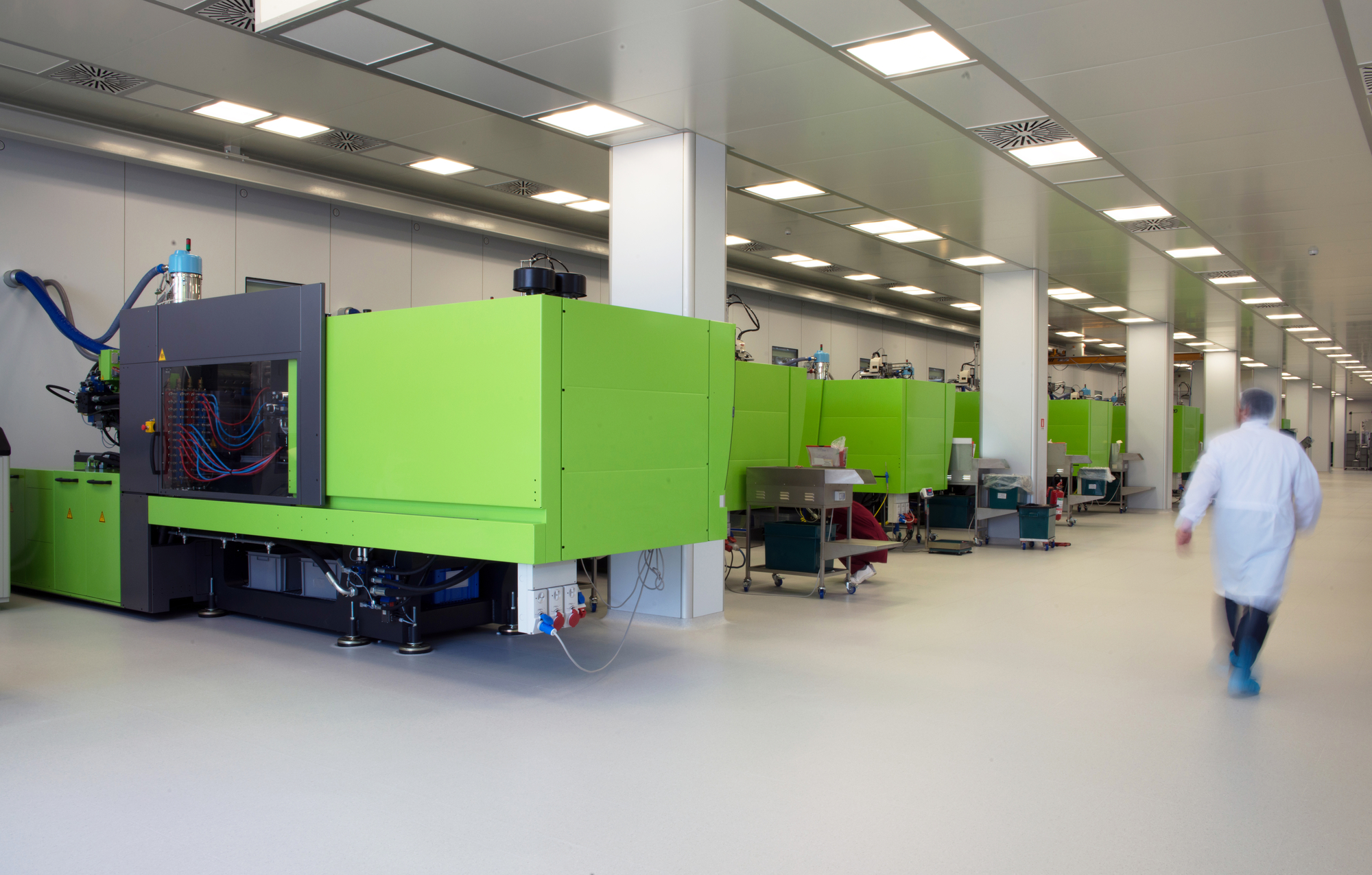
Injection molding of biomedical products in clean room

In these fields, the objects and substances handled have sizes of the order of a micrometer or nanometer and the particles present in the unpurified air can be much larger and be fixed thereon. On the other hand, the chemical or bacteriological experiments carried out can be dangerous for humans or the environment. This work is likely to be sensitive to variations in pressure, temperature, humidity or radioactive material in the case of the manufacture of isotopes. The lighting can also be Controlled environment for operations sensitive to ultraviolet rays such as photolithography, for optics. Nuclear ventilation and radiation protection requirements may also be imposed in these spaces.

Operation

The air entering the clean room can be filtered according to different levels of size of undesirable elements says contract manufaacturer; dust, up to thirty times the size of a human cell. The filters used are from the family of high efficiency air filters. To limit clogging of the filters prematurely, the air taken up at the lowest point in the room, is filtered again in an air handling unit (AHU). Then returned to the room, the mostly from above. This flow of recirculated air from top to bottom renews the total volume of air in the room up to 60 times per hour (hourly circulation rate). Finally, 2 rejected by the scientists working in the room and to compensate for the door openings. Around 30% of fresh air is added every hour ( hourly renewal rate ), filtered using a process similar to recycling. In some areas, the air is completely new.

We must then differentiate two main types of rooms:
  • the rooms with positive pressure relative to the atmospheric pressure to prevent various contaminants (dust, bacteria ...) can enter. These are found mainly in the pharmaceutical and electronics industry;
  • the rooms in depression with respect to atmospheric pressure to prevent various contaminants ( viruses , bacteria , spores , ...). They cannot escape in that case the extracted stale air passes through an air filter high efficiency or even a very low penetration filter (ULPA) before being evacuated to the outside.
Entry and exit are via one or more airlocks, sometimes fitted with an air or water shower, and changing rooms. Indeed, the human body produces a significant amount of contaminating products such as body hair, hair, dead skin cells ... This is why operators who operate in the clean room must be dressed in more equipment. Or less important according to the degree of contamination and dusting tolerated. The equipment may include a coverall, a hair cover (cap), gloves, slippers, a mask, specific underwear, or even a full-face suit.

The tools used inside are chosen to produce as few particles as possible.

Friday, 29 May 2020

What is a Clean Room and what type of installation does my company need?

The White Room concept has very easily been associated with operating theaters, the nuclear, microelectronic or pharmaceutical industries, since years ago they were exclusively seen in this type of sector.

The cleanroom, or what at that time called it clean room, appeared at the end of the nineteenth century when surgeons and microbiologists realized that the infections occurred in operating rooms are considerably reduced when there was a ventilation. They also discovered the need to sterilize surgical instruments and to apply certain clothing and hygiene standards to any user who enters the room.


It has rained a lot since then, and later, with the advances in aerospace research, controlled environment spaces were needed, developing HEPA filtration, which was an advance. Today, the demands for environmental quality in controlled environment rooms that are used in different sectors of industrial production have increased, and the design of the installation comes into play to obtain the required level of quality.

What is a White Room?

A Clean Room Rental Murieta is a room specially designed for low levels of contamination and therefore must have strictly controlled environmental parameters.

The clean room concept arises from the need to have an enclosure in which certain processes and operations can be carried out safely for the quality of these products, avoiding any type of contamination.

This type of installation can be made up of one or more rooms whose levels of air cleanliness, differential pressure, temperature and other climatic variables such as relative humidity, sound and light levels will be kept within specific limits, depending on each room. .

Conditions of a White Room depending on its level:

– Microbial exclusion: to prevent contamination of sterile materials, components and surfaces in aseptic operations.
– Microbial limitation: in occupied areas close to aseptic operations, to minimize the introduction of contamination in the exclusion zone.
– Particle exclusion: often associated with microbial exclusion, it is also applied independently to materials washed before sterilization.
– Particle limitation: to reduce the load of particles on elements before washing.
– Exclude cross contamination: to prevent contamination of one material or product with another.
– Exclusion of external contamination, including that which may be produced by the operators themselves.

And what are the White Rooms used for?

The main uses of Clean Rooms in a Controlled environment are related to certain manufacturing processes for specific products and research.

Sectors using controlled environment rooms:
  • Food Industry 
   – Drinks
   – Meat products
   – Pre-cooked
   – Sliced
  • Bio-pharmaceutical sector
– Human pharmacy
   – Veterinary Pharmacy
   – Cosmetics
   – Chemistry
   – Biotechnology
   – Animalario

Regulations regarding controlled environment rooms

To achieve low or zero levels of contamination, the design and construction of these rooms is decisive, which must be in accordance with the criteria established by the regulations related to this type of installation and those related to the use that the White Room will have.

The contract manufacturer describes good manufacturing practices for medical products, medicines, food and drugs, cosmetics, in their final forms of sale to the public, including large-scale processes in hospitals.

Friday, 8 May 2020

What are fume hoods, and how they are different from laminar hood

The Fume hood is a ventilated room that removes harmful chemical gases and volatile vapors from the laboratory and provides only personal protection. Biological safety cabinets (or biosafety cabinets) use HEPA filters to provide environmental, personnel, and product protection.
Depending on the application, the filtered air can be recirculated or exhausted, making it suitable for handling dangerous particles such as bacteria and viruses.
Without these toxic substances, staff, regardless of scientists, pharmacists, researchers, or other professions, cannot perform certain tasks or complete tasks. They can be mixed, matched, added, deleted, or researched, and these factors are "necessary evil" for some professions and businesses to thrive. Fortunately, protective safety equipment is provided to prevent workers from being exposed to harmful substances.  A Low hood is different from fume hood in various things.

 Both are designed to safely handle specially designed scientific risks, but differ in the exact type of protection provided, the airflow, and the appropriate use.

Here are some general points to consider if you need to choose a lab “hood”.
Please note that improper selection or use of equipment can have serious health and safety consequences.


Protection
To know the kind of security you need is the first pace in choosing the correct lab inclusion. Biosafety cabinets protect the environment, personnel and products, while range hoods protect personnel only. The safety is also an important factor in Lowhood also.
The flow of air
Air flow in Fumehood
As Fumehood handles hazardous chemicals (see application below), laboratory personnel draw air from the front of the instrument, through the work surface, and through diluted ducts. Release to atmosphere.

Within the range hood, proper and uninterrupted airflow is important. Do not store up large apparatus in the hood or hinder the group of air inside the component. To preserve a safe and competent work surroundings, keep your skull out of the hood and stay the sash as closed as possible.


Variation

Fume hoods: Chemical fume hoods are the most common type and operate at a constant airflow., , High-performance exhaust hoods, reduced air volume, Auxiliary air fall under the umbrella of chemical exhaust hoods. High performance hoods with a changeable air quantity system are most competent. The hood also accommodates special situations, such as those that are particularly suitable for handling peracids (built with acid-resistant materials) and radioactive applications (built with additional decontamination properties, often requiring duct filters) .

Other Cabinet Types: Choose the right cabinet for the desired operation. With the right equipment, both the space within the lab and the space itself can be optimally protected and the work done.

Conclusion of fume hood and laminar flow hood

Fume hoods and flow hoods are two laboratory devices that are essential for daily work, but serve different purposes. As one of the most important devices in the work environment, both devices play an important role. They can complete important tasks while keeping staff safe. When used properly, users of these devices can ensure a safe working environment by treating toxic chemicals or pathogenic microorganisms.

Monday, 16 March 2020

Benefits of renting a Laboratory space

Do you develop new drugs or other biopharmaceuticals or biotechnology products? Then you should rent a fully equipped laboratory where you can start on working so that your products and facts are researched or created as soon as possible. No issue how much a new drug is developed. It means learning many new steps during the process, so you can expect to see if a Fumehood breaks down, equipment is delayed or fails, etc. Failure to do so can mean a significant delay. And in the big pharmaceutical industry and in pure research, later success is far better than failure. For example, renting a lab with a chemical hood can significantly reduce your research time.

Injection molding of biomedical products in clean room

What is a rental lab?

It is a laboratory that can be rented from companies that conduct joint research with universities for a fee. By establishing a research and development system for companies and government agencies within the university, it is possible to receive research support daily from university researchers and promote industry-academia-government collaboration.

Lab rental with fume hood: Are your scientists eager to share space and equipment between them? Second, the solution is to rent a lab that holds the chemicals and all the equipment like Fume hood, scientists need to produce and continue production.

Laboratory and apparatus rental: The fact is that scientists are protective person, and each has its own manner of arranged work, reagents, and tools. Renting labs and equipment can be a challenge for companies looking to enlarge their research without making large investments in infrastructure.

Laboratory rent with natural hood: If you rent a lab with a natural hood, make sure that the outside air does not reach expensive cell cultures and that the working virus preparation does not infect the surroundings. That’s why renting a biotechnology lab and doing some cell culture experiments is the best way to speed up the R & D process.

Benefit of leasing lab space

New companies and existing names alike can also take advantage of resources by renting lab space. You also can take many advantages by leasing lab space, look at these advantages.
    • Instant access to tools and space: Building a new lab takes time and money, but many organizations don’t. The Leasing Lab allows researchers to work on short or long term projects immediately.
    • Simple network: Research centres that provide laboratories for leasing often encourage the creation of networks between tenants. The diversity of opinions and experiences at Science Park exposes its members to new advice and ideas.
    • Equipment rental: Payment for new equipment does not always fit the organization’s budget. They may have a temporary need. Rent a lab a science park often rents scientific equipment.
    • Office space and meeting rooms: An organization may not always need office equipment. However, the official locations visited by guests will improve the customer’s impression.
Portable labs are modular, controlled environments, such as all types of clean rooms of various sizes that can be easily assembled in and out of any space. This means you can set up a portable clean room in your own room, lab, or facility. Very affordable with clean rooms for rent for various uses.